Design engineering resume examples
Construction and skilled trades resume examples
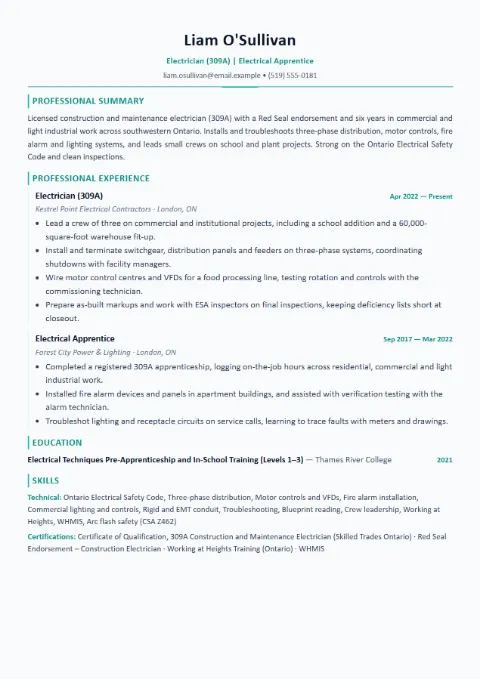
Build your engineering and construction resume from one of these templates
Use this template: AI tailors it to your resume and the job in 30 seconds. Upload your current resume, paste the job you want, and AutoApplyMax rewrites your own experience for that posting in the template you pick. The free plan includes 1 tailored resume a month.
Every engineering and construction resume example above is also a free template: open the job, then download its sample as a PDF or an editable Word file, no account needed. Want to compare designs first? See all six on the free resume templates page, with an honest ATS label on each.
Applying on LinkedIn? The AutoApplyMax Chrome extension auto-applies to LinkedIn Easy Apply engineering and construction jobs, and autofills applications on other job sites and company career pages, where you click Submit yourself. Get the free extension
How to write an engineering or construction resume around real projects
Make every bullet a project, not a duty
Hiring engineers think in projects: a water main replacement, a conveyor redesign, a switchgear upgrade, a mid-rise residential build. Describe your work the same way. Name the type of asset, your part in it (design, calculations, drafting, site supervision, commissioning) and the outcome, whether that was a passed inspection, a design approved on the first submission, or a handover on schedule.
Scope matters more than adjectives. Give a sense of size with the project value, square footage, length of pipe or road, voltage class, or crew size, using your own true figures or a plain description when the numbers are confidential.
Licensure: PE, P.Eng, EIT and trade tickets
In the US, write the license with its state, such as PE, Colorado, and note an EIT or EI certificate if you have passed the FE exam but are still logging supervised experience. In Canada, engineering is licensed by provincial associations, so write P.Eng with the regulator, for example Professional Engineers Ontario or Engineers and Geoscientists BC, and use EIT where the province grants it. Never present yourself as an engineer in a province where the title is protected and you are not registered.
For electricians and other trades, list the license level and jurisdiction: apprentice, journeyman or journeyperson, master, or a provincial certificate such as Ontario 309A. A Red Seal endorsement lets Canadian tradespeople work across provinces, so put it right beside the certificate. Apprentices should state their year and total hours logged.
Software and technical tools by discipline
List the version or module only when a posting names it. Then tie at least one tool to a project bullet so the reader sees it applied.
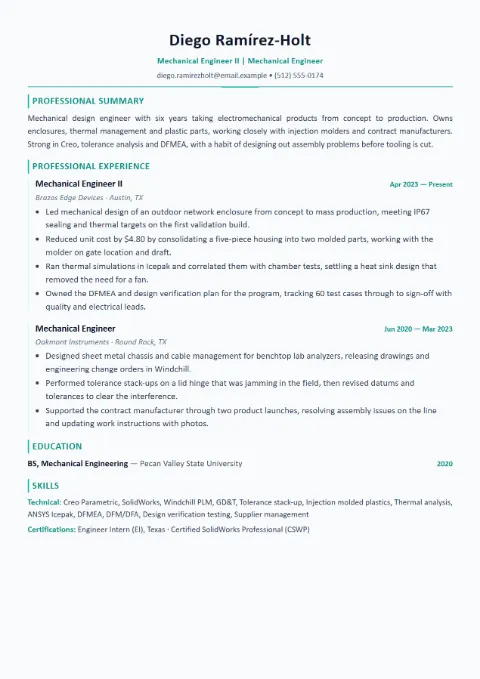
- Mechanical: SolidWorks, Autodesk Inventor, Creo, CATIA, ANSYS, GD&T, FMEA, DFM.
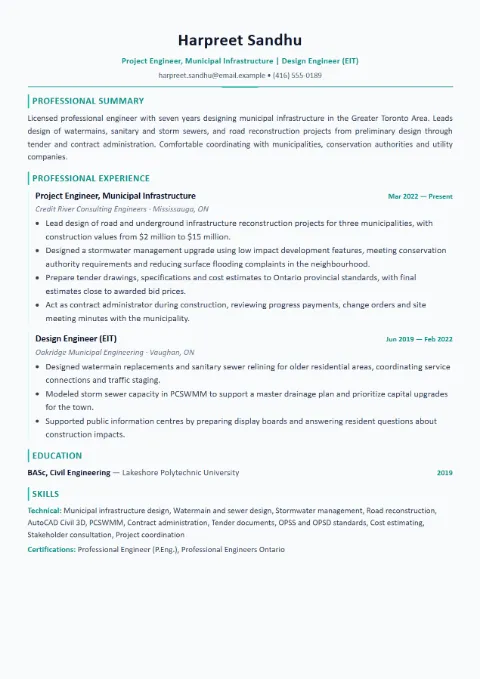
- Civil: AutoCAD Civil 3D, MicroStation, HEC-RAS, SAP2000, ETABS, Revit for structures.
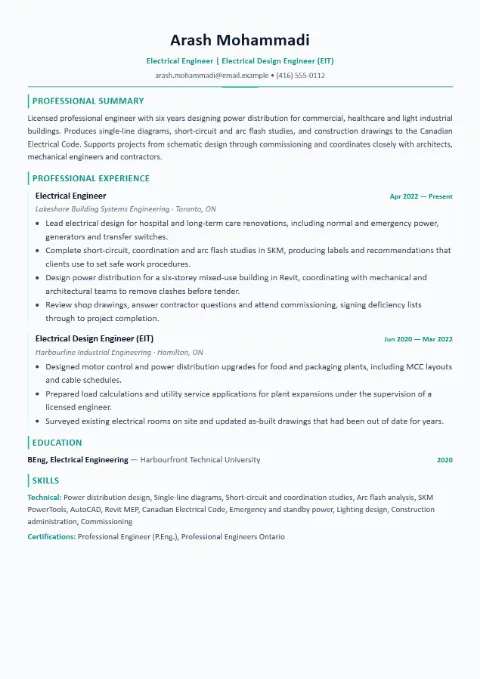
- Electrical: AutoCAD Electrical, ETAP, SKM PowerTools, PLC platforms such as Allen-Bradley or Siemens, arc flash studies.
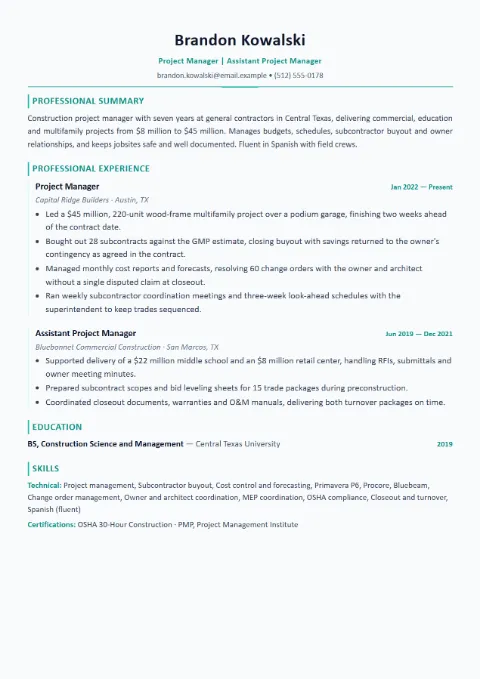
- Construction management: Procore, Primavera P6, Microsoft Project, Bluebeam, estimating tools.
- Trades: test instruments, conduit bending, motor controls, fire alarm or solar systems you install.
Codes, standards and safety credentials
Naming the codes you work to tells a reviewer which environment you know. Common examples are the NEC in the US and the Canadian Electrical Code, ASME and ASHRAE standards, ACI and AISC for structures, the International Building Code and provincial building codes. Add safety training with its issuer: OSHA 10 or OSHA 30, WHMIS, Working at Heights, first aid, confined space or NFPA 70E. Construction managers can add LEED AP, PMP or a Gold Seal certification where it applies.
Students, new grads and career changers
Co-op terms and internships are standard in engineering, especially in Canada, so list them as normal jobs with dates and bullets. Capstone projects and design teams such as Formula SAE, Baja, concrete canoe or robotics deserve their own section with your role and the result. Trade apprentices should include pre-apprenticeship programs, safety tickets and any site work, even as a helper.
Career changers coming from the military, manufacturing or a technical diploma should translate their experience into civilian project language: equipment maintained, systems troubleshot, drawings read, crews coordinated. Mention any credential evaluation if your degree was earned outside North America, since licensing boards and employers often ask about it.
Fitting your resume to each project-based posting
Postings for engineers and builders tend to name sectors and asset types, so move the most similar projects to the top for each application and echo the software and codes you really use. A short project list on a second page is acceptable for senior candidates. The AutoApplyMax builder can rework your own resume to a job description you paste, and the free ATS checker reports which required terms are still missing.
FAQ
Should I list PE or P.Eng after my name on a resume?
Yes, once the license is granted. Place it after your name in the header and repeat it in a licenses section with the state or provincial regulator. If you are still accumulating experience, write EIT or EI with the jurisdiction instead. Using the protected title before you are registered can lead to problems with the regulator.
How do I show project experience on an engineering resume?
Describe each significant project in terms of the asset, your role, the tools or codes involved and the result. Engineers with many short assignments can add a selected projects list under each employer. Keep confidential client names out, and describe value or size in general terms when you cannot share the real figures.
What should an electrician include on a resume in Canada?
Write your certificate with its province, such as 309A in Ontario, and add the Red Seal endorsement if you have it, since it is recognized across provinces. Then list your apprenticeship hours, the type of work you have done, the code you work to, safety tickets such as WHMIS and Working at Heights, and any specialized systems.
Do construction managers need a two-page resume?
Often, yes, when the second page holds a meaningful project list. Keep the first page focused on roles, responsibilities and your largest builds, then add a table-free list of projects with type, value range and your role. Early-career coordinators and assistant superintendents should stay on one page.
Are these engineering and construction resume examples free to use?
Yes. All samples are free to read and adapt, and the engineers, contractors and projects in them are fictional. Change every detail to match your real licenses, projects and tools. If you want your current resume rebuilt in one of these templates, upload it to the AutoApplyMax builder and paste the posting you are applying to.
More resume examples by field
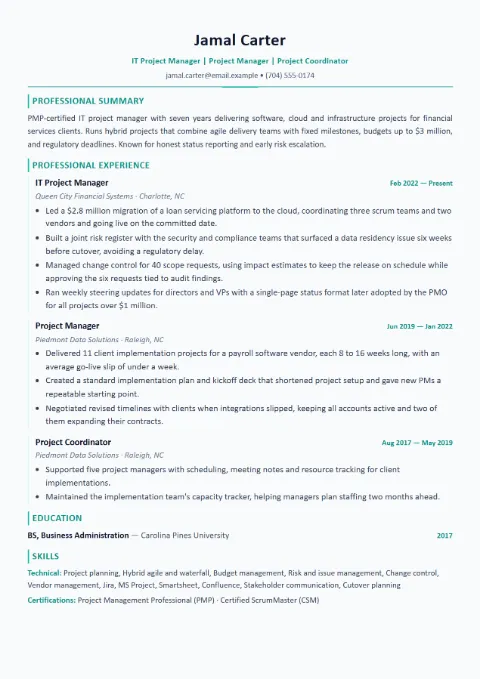 Management resume examples9 jobs, entry to senior
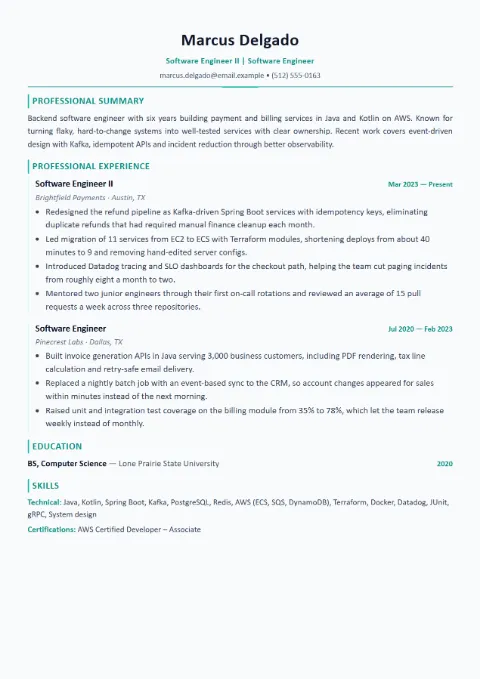 Tech resume examples24 jobs, entry to senior
All resume examplesEvery job, grouped by field
Tech resume examples24 jobs, entry to senior
All resume examplesEvery job, grouped by field
Related guides: ATS-friendly resume template · which resume format to use in 2026 · resume keywords by job · how to tailor your resume to a job description · one-page resume tips · resume summary formulas.